Objectives
- Define the concept of a limit
- Use a table of values to evaluate simple limits.
- Use a graph to evaluate simple limits.
- Evaluate a limit by substitution.
What is a Limit?
- The limit of a function at a point is the value of a function as it approaches on that point.
- For example, take a look at the function
. - What does it mean to take the limit of
as it approaches to ? - One way we can do this is by taking values that get closer and closer to
.
- What does it mean to take the limit of
- We can see that as we take values closer to
, we slowly approach the value . - Symbolically, we can express it as:
Definition
Informal Definition of a LimitA limit of a function
at any point is a real valued number where as approaches , the value of approaches . Mathematically, this statement can be expressed as:
Using Tables to Evaluate Limits
- Just like before, we can use a table to evaluate limits.
- For instance, let us find the limit of the function:
- Like from before, we can set-up a table of values approaching
from .
- We can also set-up a table of values approaching
from .
- Therefore:
Using Graphs to Evaluate Limits
- Suppose that we have the limit
- We can instead use a graph to find and evaluate its limit!
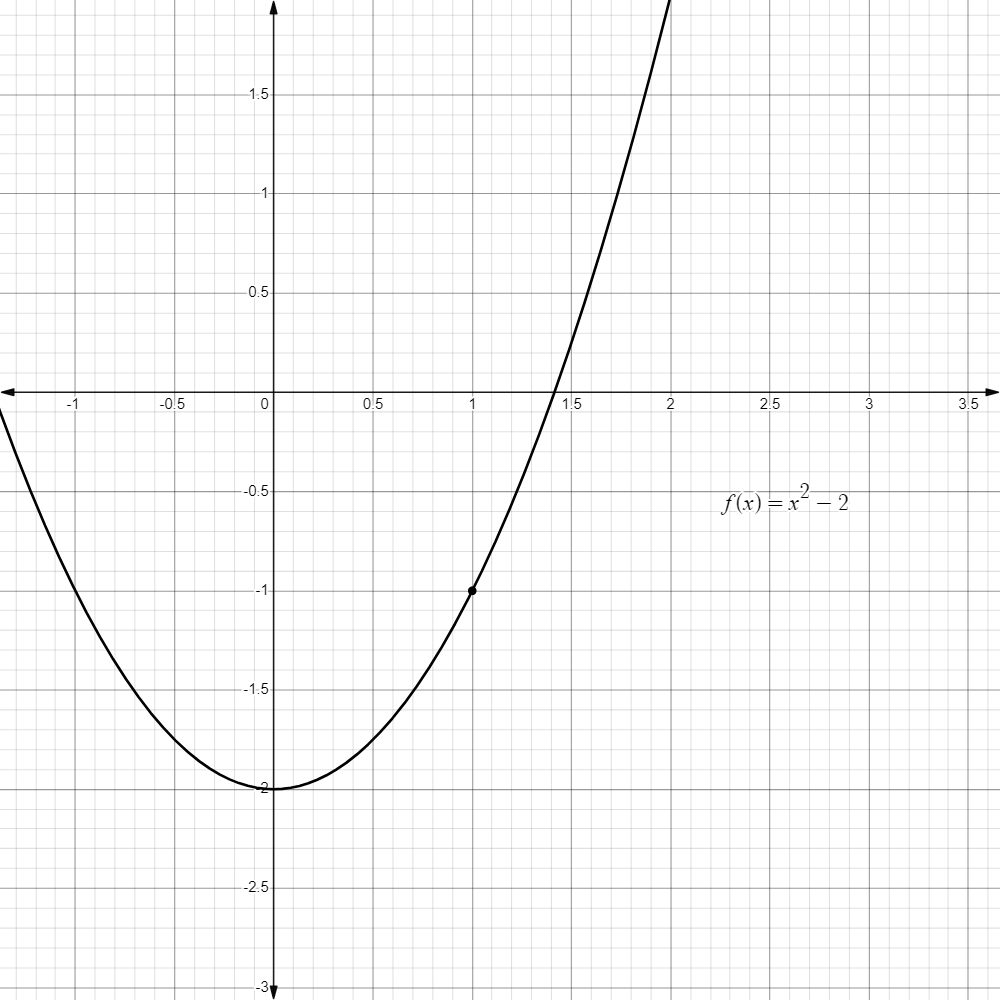
- Here, we see the graph of
and the value of at .
- Here, we see the graph of
-
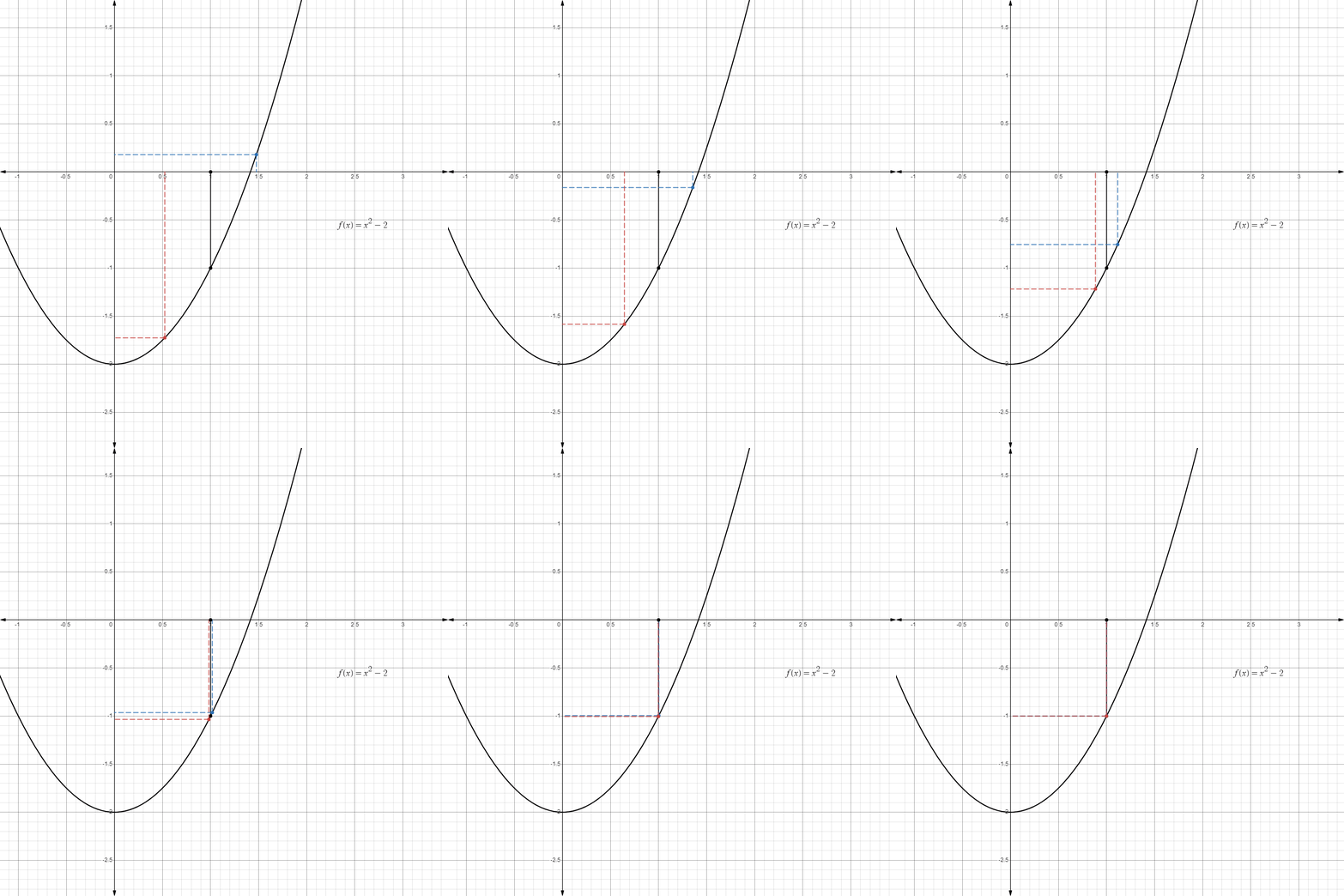
But as we approach
from either side, the value closes in at .
-
Therefore, we can confidently say that:
- You may have noticed that some limits can be evaluated by directly evaluating them.
- However, consider the limit:
- If we directly evaluate it, upon further simplification, it becomes undefined.
- However, if we consider approaching
instead, using its graph, we get:
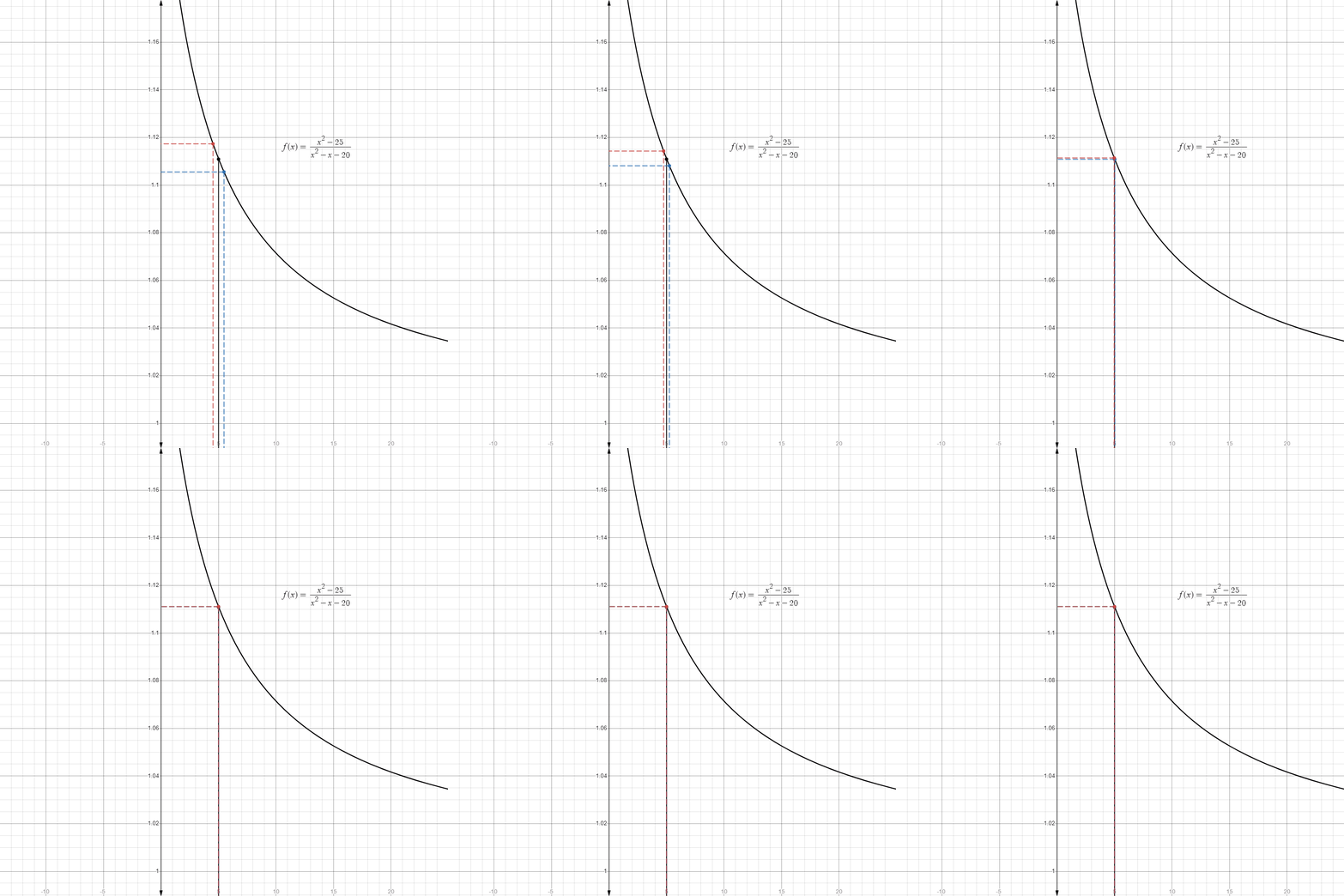
- As we can see, when we approach
, the limit approaches in at a single value around . - In fact, the exact value is
, which is around . Therefore:
- In fact, the exact value is
- But have you ever wondered why a limit exists yet the actual function value is undefined?
- This is because limits consider the behavior of the function around a point, not exactly at the point itself like when we evaluate the function at a point.